

The documented risks of these drugs are provided so the public can make informed, educated decisions. Adderall is a stimulant drug, classified by the U.S. Drug Enforcement Administration (DEA) as Schedule II, in the same class of highly addictive drugs as morphine, opium and cocaine. The DEA states that the use of stimulants can lead to “severe psychological or physical dependence” and that “these drugs are also considered dangerous.” Adderall is also known as Adderall XR and amphetamine/dextroamphetamine.
Please note: No one should attempt to get off of psychiatric drugs without a doctor’s supervision.
Also, read the FDA’s Adderall Medication Guide for more information. MedGuides include “the particular serious and significant public health concern that has created the need for the Medication Guide” and notes “pediatric risks.”
Adderall Drug Warnings:
There have been 13 drug regulatory agency warnings from two countries (Canada and United States) on Adderall (or amphetamine/dextroamphetamine). These include the following (note that some warnings cite more than one side effect, so the list below may not be equal to the total number of warnings):
- 4 warnings on Adderall causing cardiovascular disorders
- 3 warnings on Adderall causing death or sudden death
- 2 warnings on Adderall causing mania or psychosis
- 2 warnings on Adderall causing eye problems
- 2 warnings on Adderall causing hallucinations
- 2 warnings on Adderall causing hostility or aggression
- 2 warnings on Adderall causing involuntary movements
- 2 warnings on Adderall causing stroke
- 2 warnings on Adderall causing irritability
- 1 warning on Adderall causing heart problems
- 1 warning on Adderall causing allergic reactions
- 1 warning on Adderall causing depression
- 1 warning on Adderall causing suicide risk or attempts
- 1 warning on Adderall causing agitation
- 1 warning on Adderall causing heart attacks
- 1 warning on Adderall causing nervous system disorders
Adderall Drug Studies:
There have been 4 studies done in the United States on Adderall (or amphetamine/dextroamphetamine). These include the following (note that some studies cite more than one side effect, so the list below may not be equal to the total number of studies):
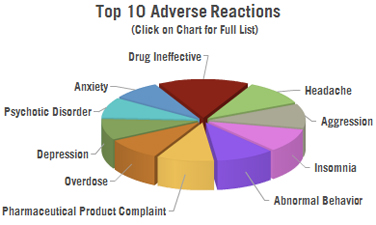
Top Reactions for All Ages:
There have been 1,152 adverse reactions reported to the US FDA in connection with Adderall.
The FDA estimates that less than 1% of all serious events are ever reported to it, so the actual number of side effects occurring are most certainly higher.
Documented Side Effects of Adderall:
Source: Physicians Desk Reference, National Institutes of Health’s Medline Plus, and/or the drug label.
- Aggression/hostility
- Blistering/peeling skin
- Difficulty breathing or swallowing
- Difficulty falling asleep or staying asleep
- Hallucinations
- Hives
- Irregular heartbeat
- Mania
- Motor tics/verbal tics
- Nervousness
- Restlessness
- Seizures
- Sexual dysfunction
- Slow or difficult speech
- Stevens-johnson syndrome
- Swelling of the eyes, face, tongue, or throat
- Uncontrollable shaking of a part of the body
- Weight loss
Side Effects of Common Psychiatric Drugs

This brochure is an overview of the side effects of common psychiatric drugs and includes information on drug regulatory agency warnings, studies and other reports that may not appear in the packaging information for the drugs.
It is a simple guide that documents the dangerous and deadly side effects of the drugs prescribed to millions of men, women and children diagnosed with bogus mental disorders.
Also visit the Psychiatric Drug Side Effects Search Engine for advanced searches on specific psychiatric drugs
Reference and Source from: https://www.cchrint.org/psychiatric-drugs/stimulantsideeffects/adderallsideeffects/